
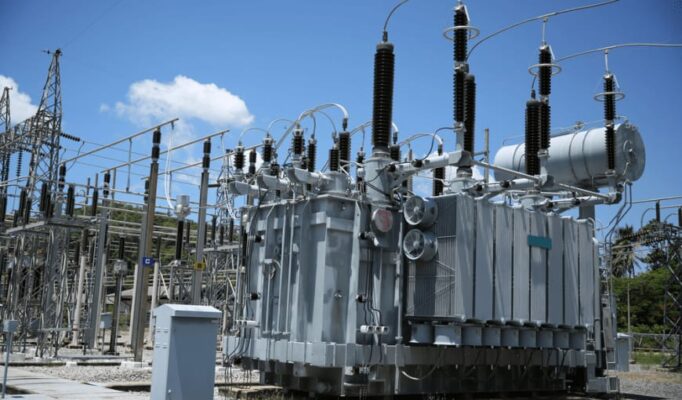
Types of Transformers
Transformers are an essential part of every electrical power system. Whether it is a power plant, a substation, or your home connection, electricity passes through different types of transformers before reaching the final user. In this guide, Transformer Guruji explains transformer basics in simple English along with their uses and classifications.
1. Step-Up Transformer
A step-up transformer increases the voltage level.
It is mainly used in power plants where electricity generated at low voltage needs to be stepped up for long-distance transmission. Higher voltage helps reduce power loss while sending electricity through transmission lines.
2. Step-Down Transformer
A step-down transformer reduces voltage from high to low levels.
Substations use step-down transformers to make electricity safe for homes, offices, and industries. This is the most common transformer used in power distribution.
3. Auto-Transformer
An autotransformer has a single winding with multiple tapping points.
Because of its design, it becomes smaller, cheaper, and more efficient than a normal transformer. Autotransformers are commonly used for voltage regulation and motor control applications.
4. Distribution Transformer
A distribution transformer is placed close to consumers to deliver electricity at usable voltage levels.
These transformers run continuously and are designed for low-voltage distribution systems such as residential and commercial areas.
5. Instrument Transformer
Instrument transformers are used for measurement and protection in electrical systems. They are of two types:
- Current Transformer (CT): Reduces high current to a measurable level
- Voltage Transformer (VT/PT): Reduces high voltage for meters and relays
They make power system monitoring safe and accurate.
6. Isolation Transformer
An isolation transformer separates two electrical circuits without changing the voltage.
It is mainly used for safety purposes, noise reduction, and protecting sensitive devices like medical equipment and laboratory instruments.
7. Variable Transformer (Variac)
A variable transformer or Variac provides a smooth, adjustable voltage output.
These are commonly used in testing labs, repair workshops, and places where different voltages are required for experiments or equipment testing.
Transformer Classification
Transformers can also be classified based on their construction and application. Here are the main categories:
1. Based on Phases
- Single-phase transformer – used in homes and light-load systems
- Three-phase transformer – used in industries and large power systems
2. Based on Cooling Method
- Dry-type transformer (air-cooled) – safe for indoor areas
- Oil-filled transformer – uses oil as a cooling and insulating medium, suitable for outdoor installations
3. Based on Core Construction
- Core-type transformer – windings are placed around the core
- Shell-type transformer – the core surrounds the windings, giving better mechanical strength
4. Based on Application
- Power transformer – used in transmission networks
- Distribution transformer – used near end-users
- Instrument transformer – used for measurement and protection
5. Based on Voltage Conversion
- Step-up transformer – increases voltage
- Step-down transformer – decreases voltage