
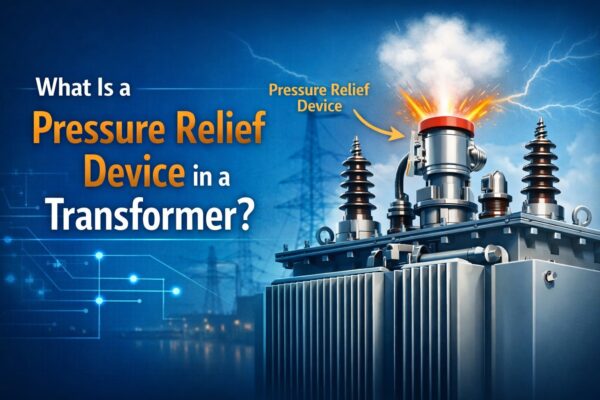
Pressure Relief Device in Transformer – Function, Working Principle, Types & Importance
A Pressure Relief Device (PRD), also called a Pressure Relief Valve (PRV), is one of the most critical transformer safety devices used in power and distribution transformers. Its primary role is to protect the transformer tank from excessive internal pressure that may develop during abnormal operating conditions or internal faults.
If this pressure is not released in time, it can lead to oil leakage, tank deformation, fire hazards, or even transformer explosion. The pressure relief device ensures that excess pressure is released safely and in a controlled manner, keeping the transformer reliable and secure.
What Is a Pressure Relief Device in a Transformer?
A pressure relief device in a transformer is a mechanical protection component installed on the main transformer tank or conservator tank. It operates automatically and opens whenever the internal pressure exceeds a pre-defined safe limit.
Once activated, it releases gases or oil vapours to the atmosphere, preventing damage to the transformer structure.
Why Internal Pressure Builds Up in a Transformer?
Internal pressure inside a transformer increases mainly due to electrical and thermal abnormalities. Common causes include:
- Internal electrical faults
- Short circuits
- Continuous overloading
- Insulation breakdown
- Transformer oil decomposition at high temperature
- Internal arcing inside the tank
These conditions generate heat and gases, which rapidly raise pressure inside the sealed transformer tank.
Function of the Pressure Relief Device in the Transformer
The main function of a pressure relief device is to prevent mechanical failure of the transformer tank by releasing excess pressure in time.
Key Functions:
- Prevent transformer tank rupture or explosion
- Protect internal windings and insulation
- Reduce fire and safety risks
- Improve transformer reliability
- Ensure safe operation under fault conditions
Working Principle of Pressure Relief Device
The working principle of a pressure relief device is simple, fast, and fully automatic.
- The device is usually spring-loaded or diaphragm-based
- It remains closed during normal transformer operation
- When internal pressure exceeds the preset limit:
- The valve or diaphragm opens instantly
- Excess pressure and gases are discharged safely
- After pressure normalises:
- Spring-loaded valves reseat automatically
- Bursting disc types require disc replacement
This quick response protects the transformer from sudden mechanical stress.
Types of Pressure Relief Devices Used in Transformers
1. Spring-Loaded Pressure Relief Valve
- Most commonly used PRD in transformers
- Opens at a predefined pressure
- Automatically closes after pressure reduction
- Suitable for continuous protection
2. Bursting Disc Type Pressure Relief Device
- Uses a thin metallic diaphragm
- Disc bursts when pressure exceeds limit
- Single-use device, disc must be replaced
- Simple and highly reliable
3. Dynamic Pressure Relief Device
- Designed for rapid pressure rise
- Ideal for short-circuit and internal arc faults
- Faster response than static PRDs
- Used in large power transformers
Pressure Setting of the Pressure Relief Device
The pressure setting of a PRD is a crucial design parameter.
- Depends on transformer tank strength
- Based on oil volume and transformer rating
- Typically set between 0.2 to 0.5 bar (3–7 psi)
- Higher capacity transformers may use higher settings
Correct pressure calibration avoids false operation while ensuring maximum protection.
Installation Location of Pressure Relief Device
The pressure relief device is generally installed at:
- The top cover of the transformer main tank
- Conservator tank (in specific designs)
Installation Considerations:
- Free and unobstructed venting of gases
- Safe discharge direction away from personnel
- No interference with bushings or terminals
- Compliance with safety standards
Venting Path and Safety Design
When the pressure relief device operates:
- Gases are released through a controlled venting path
- Vent direction prevents oil splashing on hot surfaces
- Protects nearby equipment and operating personnel
- Significantly reduces fire risk
Proper vent design is essential for transformer safety compliance.
Resetting and Maintenance of the Pressure Relief Device
Resetting:
- Spring-loaded PRDs reset automatically
- Bursting disc types need manual disc replacement
Maintenance:
- Periodic visual inspection
- Check for oil leakage or blockage
- Ensure smooth valve operation
- Verify pressure settings during routine servicing
Regular maintenance ensures long-term reliability of the pressure relief device.
Importance of Pressure Relief Devices in Power Transformers
A pressure relief device is a mandatory protection component in modern transformers.
Major Benefits:
- Prevents catastrophic transformer failure
- Increases transformer service life
- Improves operational and personnel safety
- Reduces downtime and repair costs
- Meets international transformer safety standards
Without a PRD, even a minor internal fault can result in severe damage.
Frequently Asked Questions (FAQs) – Pressure Relief Device in Transformer
1. What is a pressure relief device in a transformer?
A pressure relief device (PRD) in a transformer is a safety component that automatically releases excess internal pressure from the transformer tank. It protects the transformer from damage, oil leakage, fire hazards, and explosion during internal faults or abnormal operating conditions.
2. Why is a pressure relief device important in power transformers?
A pressure relief device is important because it prevents catastrophic failure of the transformer tank caused by sudden pressure rise due to short circuits, insulation failure, or overheating. It ensures safe, reliable, and long-term operation of power transformers.
3. What causes high pressure inside a transformer?
High pressure inside a transformer can be caused by:
- Internal electrical faults
- Short circuits
- Overloading
- Oil decomposition due to high temperature
- Internal arcing
These conditions generate gases and heat, which increase internal pressure rapidly.
4. How does a pressure relief device work in a transformer?
A pressure relief device works on a spring-loaded or diaphragm-based mechanism. When the internal pressure exceeds a preset limit, the valve opens instantly and releases gases safely. Once the pressure returns to normal, the valve closes automatically or requires disc replacement, depending on the type.
5. What are the types of pressure relief devices used in transformers?
The commonly used types of pressure relief devices in transformers are:
- Spring-loaded pressure relief valve
- Bursting disc type pressure relief device
- Dynamic pressure relief device for rapid pressure rise
Each type is selected based on transformer rating and application.
6. What is the typical pressure setting of a transformer pressure relief device?
The pressure setting of a transformer pressure relief device generally ranges between 0.2 bar to 0.5 bar (3–7 psi). The exact value depends on transformer design, tank strength, and oil volume.
7. Where is the pressure relief device installed in a transformer?
The pressure relief device is usually installed on the top cover of the transformer main tank or on the conservator tank. The location allows safe venting of gases and prevents oil splashing near electrical components.
8. Is a pressure relief device mandatory in transformers?
Yes, a pressure relief device is mandatory as per transformer safety standards, especially in power transformers. It is a critical protection component required to prevent explosions and ensure safe operation.
9. Does a pressure relief device require maintenance?
Yes, regular maintenance is required. This includes visual inspection, checking for oil leakage, ensuring smooth valve operation, and verifying pressure settings during transformer servicing.
10. What happens if a transformer does not have a pressure relief device?
Without a pressure relief device, even a small internal fault can cause dangerous pressure buildup, leading to tank rupture, oil fire, or complete transformer failure. This can result in heavy financial loss and serious safety risks.
11. What is the difference between a pressure relief valve and a bursting disc?
A pressure relief valve is reusable and automatically resets after pressure normalises, while a bursting disc is a single-use device that must be replaced after operation. Both serve the same protective purpose.
12. Can a pressure relief device prevent a transformer explosion?
Yes, a properly designed and maintained pressure relief device significantly reduces the risk of transformer explosion by releasing excess internal pressure before it reaches a dangerous level.